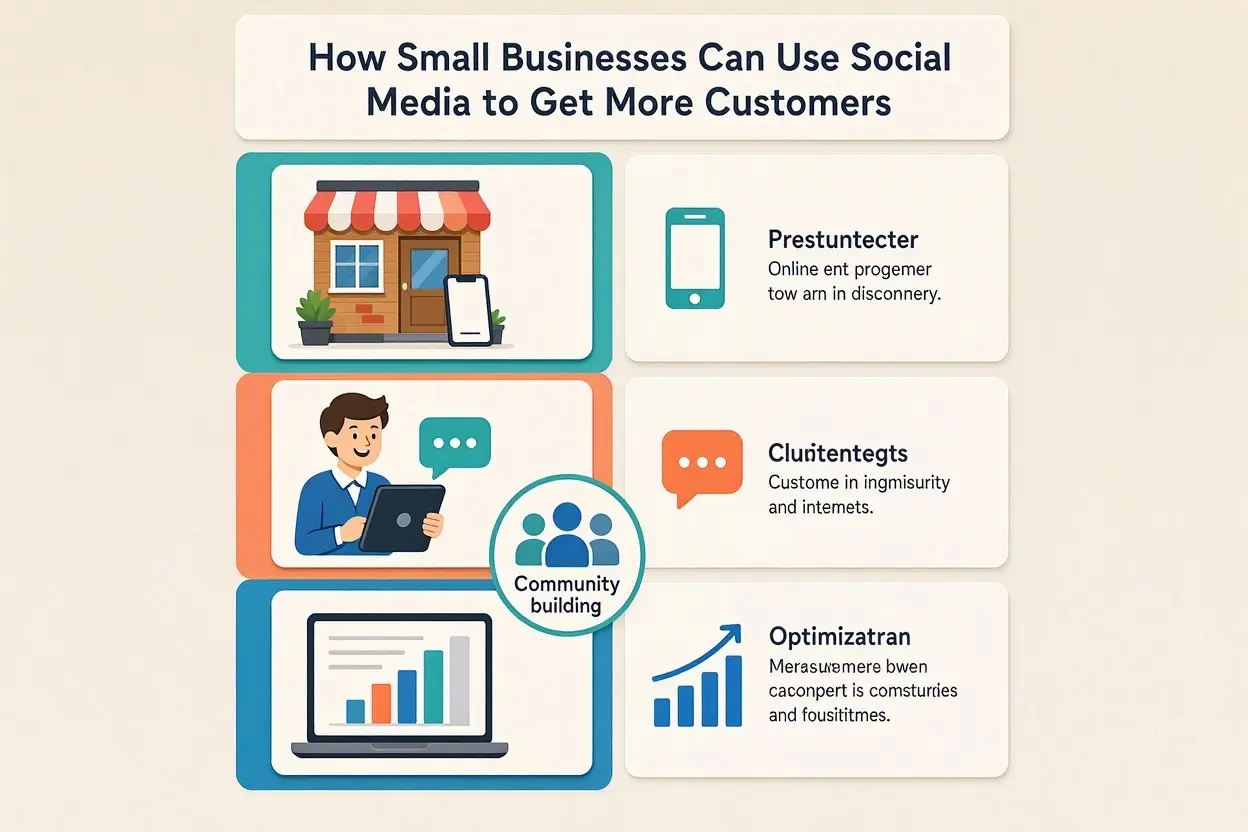
Social media has changed the way businesses find and communicate with customers. A small business no longer needs a huge advertising budget to reach people who may be interested in its products or services. With the right social media strategy, even a local shop, freelancer, startup, or home-based business can build an audience and turn followers into paying customers.
The key is not simply to post every day. Small businesses need to understand what their customers want, choose the right platforms, share useful content, and build genuine relationships with their audience.
Here are some practical ways small businesses can use social media to get more customers.
1. Choose the Right Social Media Platforms
One of the biggest mistakes small businesses make is trying to be active on every social media platform.
You do not necessarily need Facebook, Instagram, TikTok, LinkedIn, Pinterest, YouTube, and every other platform at the same time. It is usually better to focus on the platforms where your potential customers already spend their time.
For example, a clothing business may get better results from Instagram and TikTok because customers can easily discover products through photos and videos. A business selling professional services may find LinkedIn more useful. A local restaurant might benefit from Facebook and Instagram because customers can see food photos, promotions, reviews, and location information.
Start with one or two platforms and learn what works. You can always expand later.
2. Create a Complete Business Profile
Before trying to attract customers, make sure your social media profile looks professional.
Your profile should clearly explain what your business does. Use a recognizable business name, a good profile image or logo, and a short description of your products or services.
Include important information such as:
- What you sell
- Who you serve
- Your location, if relevant
- How customers can contact you
- Your website
- Business hours, if applicable
- A link to your store or booking page
A person who discovers your business through a social media post should not have to search around to figure out how to buy from you.
3. Understand Your Target Customers
Social media marketing becomes much easier when you know exactly who you are trying to reach.
Think about your ideal customer. What problems do they have? What products do they need? What questions do they ask before making a purchase? What type of content do they enjoy?
For example, if you run a small fitness business, your audience might be interested in beginner workouts, healthy meals, weight-loss tips, and simple exercise routines.
If you sell handmade products, your customers may want to see how your products are made, how they can be used, and what makes them different from mass-produced alternatives.
The better you understand your audience, the easier it becomes to create content that gets attention.
4. Share Useful Content Instead of Only Promoting Products
People do not follow business accounts because they want to see advertisements all day.
If every post says “Buy now,” “Order today,” or “Limited offer,” followers may eventually lose interest.
Instead, create a mixture of promotional, educational, entertaining, and informative content.
For example, a small clothing brand could share:
- Styling ideas
- Outfit combinations
- Clothing care tips
- Behind-the-scenes content
- Customer photos
- New product announcements
- Seasonal fashion ideas
This type of content gives people a reason to follow your account even when they are not ready to buy.
When customers eventually need your product, your business is more likely to be remembered.
5. Use Short Videos to Reach More People
Short-form video has become an important way for businesses to attract attention online.
You do not need expensive cameras or professional equipment to create useful videos. A smartphone and good lighting can be enough for many small businesses.
You could create videos showing:
- How your product works
- How a product is made
- Before-and-after results
- Common mistakes customers make
- Quick tips
- Frequently asked questions
- Behind-the-scenes moments
- Customer experiences
The goal is not to make every video perfect. Authentic and useful videos can often feel more trustworthy than highly polished advertisements.
6. Show the People Behind the Business
Customers like to know that there are real people behind a business.
Small businesses have an advantage here because they can often create a more personal connection than large corporations.
Introduce yourself and your team. Show your workspace. Explain why you started the business. Share some of the work that goes into creating your products or serving customers.
For example, a bakery could show how a popular cake is prepared. A photographer could share a behind-the-scenes look at a photo session. A local repair business could explain how a common problem is fixed.
These simple posts can make a business feel more human and trustworthy.
7. Encourage Customer Reviews and Testimonials
People often look for proof before spending money with a business they have never used before.
Customer reviews and testimonials can help reduce that uncertainty.
Ask satisfied customers if they would be willing to leave a review or share a photo of their purchase. With their permission, you can feature their feedback on your social media pages.
You can also share user-generated content when customers tag your business.
Real customer experiences can be more convincing than a business simply saying that its products are great.
8. Respond to Comments and Messages
Social media is not just a publishing platform. It is also a communication channel.
If someone comments on your post, respond when appropriate. If a potential customer sends a message asking about price, availability, delivery, or services, try to answer promptly.
A quick and helpful response can make the difference between gaining a customer and losing one.
Even negative comments should be handled professionally. Avoid arguing with customers publicly. Instead, try to understand the issue and offer a reasonable solution.
9. Use Local Content to Attract Nearby Customers
If your business serves a particular city or area, local social media marketing can be especially useful.
Mention your location naturally in relevant posts. Share local events, participate in community discussions, and create content that is useful to people in your area.
For example, a local restaurant might post about popular dishes for weekend gatherings. A salon could share seasonal beauty tips for local customers. A home service company could create posts addressing common problems homeowners experience in the area.
Local content can help people recognize your business as part of their community.
10. Offer Special Deals to Social Media Followers
Special offers can encourage people to take action.
You might offer a limited-time discount, free delivery, a first-order promotion, or a small bonus for social media followers.
However, discounts should not be the only reason people buy from you.
Instead of constantly reducing prices, consider creating offers that add value. For example, you could provide a free consultation, complimentary service, bonus product, or free guide.
This can attract customers without training them to wait for discounts.
11. Use Hashtags Carefully
Hashtags can help categorize your content and make it easier for interested people to discover your posts on platforms that support them.
However, adding dozens of unrelated hashtags does not automatically make a post successful.
Use relevant hashtags connected to your industry, product, location, or audience.
For a local coffee shop, for example, location-based and coffee-related hashtags may be more useful than extremely broad hashtags with millions of posts.
The important thing is relevance rather than quantity.
12. Consider Paid Social Media Advertising
Organic social media can help a business grow, but paid advertising can sometimes speed up the process.
Most major social platforms allow businesses to target advertisements based on factors such as location, interests, demographics, and online behavior.
A small business does not necessarily need to spend a large amount of money.
Start with a small budget and test different advertisements. Track which campaigns generate useful actions such as website visits, inquiries, bookings, or purchases.
If an advertisement is not producing results, change the audience, offer, creative, or message instead of simply increasing the budget.
13. Make It Easy for People to Buy
Getting attention on social media is only one part of the process.
Once someone becomes interested, make the next step as simple as possible.
Your social media profile should make it clear how customers can:
- Place an order
- Visit your store
- Book an appointment
- Contact your business
- Visit your website
- Request a quote
Avoid making customers go through unnecessary steps.
A clear call to action can be simple, such as “Send us a message,” “Visit our website,” “Book your appointment,” or “Order online.”
14. Track What Is Working
You do not have to guess whether your social media efforts are helping your business.
Most social platforms provide analytics that show information such as reach, engagement, profile visits, video views, and other useful metrics.
Pay attention to the posts that generate meaningful results.
For example, if educational videos consistently bring more profile visits than product photos, consider creating more educational videos.
The goal is not to chase likes. A post with fewer likes but several genuine customer inquiries may be much more valuable than a post that gets hundreds of likes but no business.
15. Be Consistent
Building customers through social media usually takes time.
A business may publish a few posts and see very little response at first. That does not necessarily mean social media is not working.
Consistency helps your audience become familiar with your business.
Create a realistic posting schedule that you can maintain. For one small business, three useful posts per week may be better than posting multiple times every day for one week and then disappearing for a month.
Focus on quality, consistency, and genuine interaction.
A Simple Social Media Strategy for Small Businesses
If you are starting from scratch, keep your strategy simple.
First, choose one or two platforms where your customers are most active. Then create a professional profile and start sharing useful content.
A simple weekly plan could look like this:
Monday: Share an educational tip.
Wednesday: Post a product, service, or behind-the-scenes video.
Friday: Share a customer review, success story, or useful industry-related post.
Weekend: Publish something personal, entertaining, or community-focused.
You can adjust this schedule based on your audience and business goals.
The most important thing is to create content that gives people a reason to follow your business and eventually become customers.
Final Thoughts
Social media can be a powerful customer acquisition tool for small businesses, but success does not come from simply collecting followers.
The real goal is to build trust, provide useful information, communicate with potential customers, and make it easy for people to take the next step.
Start with the platforms that make sense for your audience. Share helpful content, show the people behind your business, respond to customers, use reviews and testimonials, and regularly measure your results.
You do not need a huge marketing budget to get started. With a clear strategy and consistent effort, social media can help a small business reach new customers and build long-term relationships with them.
Frequently Asked Questions
1. How can social media help a small business get more customers?
Social media helps small businesses reach potential customers, build brand awareness, answer questions, display products, collect reviews, and drive people to a website, store, or booking page.
2. Which social media platform is best for small businesses?
There is no single best platform for every business. The right platform depends on your target audience, industry, location, and type of content. It is usually better to focus on one or two platforms where your customers are already active.
3. How often should a small business post on social media?
There is no universal posting frequency. A realistic schedule that you can maintain consistently is more important than posting constantly. Several useful posts each week can be a good starting point.
4. Do small businesses need to pay for social media advertising?
No. Businesses can use organic content to reach people without paying for advertisements. However, paid advertising can help businesses reach a more targeted audience and potentially generate customers faster.
5. What type of social media content attracts customers?
Educational tips, short videos, product demonstrations, customer reviews, behind-the-scenes content, frequently asked questions, and useful industry information can all help attract potential customers.
6. How can a local business get customers from social media?
Local businesses can use location-related content, local hashtags, customer reviews, community posts, special local offers, and clear business information to attract nearby customers.
7. Should small businesses respond to social media comments?
Yes. Responding to comments and messages shows customers that the business is active and willing to communicate. Helpful responses can also build trust with potential customers.
8. How long does it take to get customers from social media?
The timeframe varies from business to business. Some businesses may receive inquiries quickly, while others need several weeks or months to build an audience and establish trust. Consistency and the quality of the strategy both matter.
9. Are followers more important than sales?
No. A large follower count does not necessarily mean a business is successful. Meaningful engagement, inquiries, leads, bookings, and sales are generally more useful measures of social media performance.
10. Can a small business manage social media without a marketing agency?
Yes. Many small businesses can manage their own social media by using a simple content plan and scheduling posts in advance. As the business grows, professional help can be considered if managing social media becomes too time-consuming.
Leave a Reply