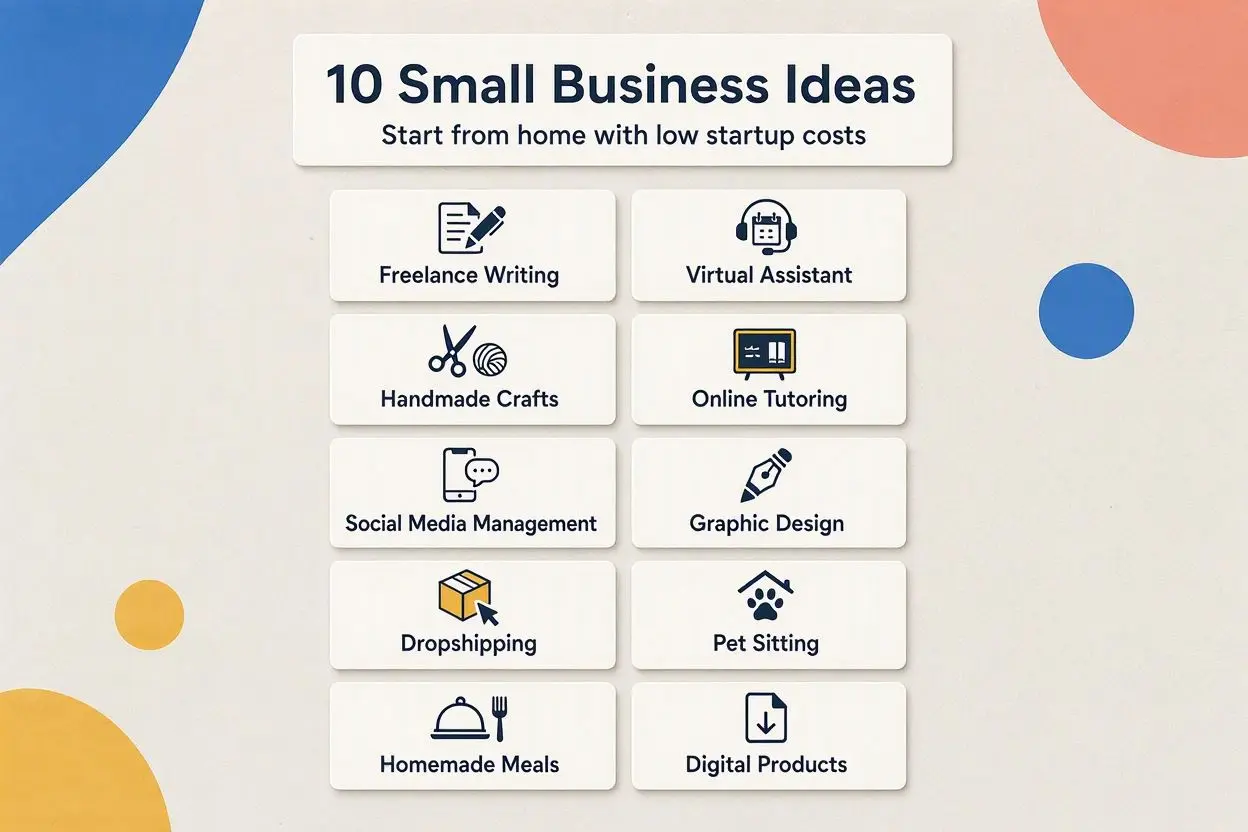
Starting a small business does not always require a large investment, an office, or a team of employees. Today, many people are turning skills, hobbies, and simple ideas into home-based businesses with relatively low startup costs.
The biggest advantage of starting from home is that you can keep your initial expenses under control. You may already have some of the basic tools you need, such as a laptop, smartphone, internet connection, or a small workspace. This allows you to focus more of your budget on finding customers and improving your service.
Whether you want to build a full-time business or simply create an additional source of income, there are plenty of options worth considering.
Here are 10 small business ideas you can start from home without spending a fortune.
1. Freelance Writing
If you enjoy writing, freelance writing can be one of the simplest home-based businesses to start.
Businesses, websites, online stores, and publishers constantly need written content. This can include blog posts, website copy, product descriptions, newsletters, social media posts, and other marketing materials.
You do not necessarily need expensive equipment. A computer, reliable internet connection, and good writing skills can be enough to get started.
At first, you can focus on a specific area such as technology, travel, business, health, or lifestyle. Choosing a niche can make it easier to show potential clients that you understand their audience.
As you gain experience, you can build a portfolio and gradually increase your rates.
2. Virtual Assistant Services
Small businesses often have more administrative work than they can handle themselves. This creates opportunities for virtual assistants who can work remotely.
A virtual assistant may help with tasks such as managing emails, scheduling appointments, updating spreadsheets, researching information, organizing files, or handling basic customer communication.
The startup cost can be quite low because most of the work can be completed using a computer and internet connection.
One useful approach is to start with a few services you already know how to provide rather than trying to offer everything. As you become more experienced, you can expand your services and work with multiple clients.
3. Social Media Management
Many small businesses understand that they need a social media presence but do not have enough time to manage their accounts consistently.
If you understand platforms such as Instagram, Facebook, TikTok, LinkedIn, or Pinterest, you could offer social media management services from home.
Your work might include creating content ideas, writing captions, scheduling posts, responding to basic comments, and tracking engagement.
You can begin by helping a local business, family-owned company, or small online store. Creating sample posts for your portfolio can also help you demonstrate your skills before you have many clients.
4. Online Tutoring
If you have strong knowledge of a particular subject, online tutoring can turn that knowledge into a home-based business.
You could teach school subjects, languages, computer skills, music, mathematics, or other areas where students need support.
Depending on your service, you may only need a computer, webcam, microphone, and a stable internet connection.
One benefit of tutoring is that you can choose your schedule. You can offer individual sessions or create small group classes if demand grows.
Building a good reputation is especially important in tutoring. Positive feedback from students and parents can help you attract new customers through referrals.
5. Print-on-Demand Products
Print-on-demand is another option for people who enjoy design but do not want to purchase large amounts of inventory.
With this business model, you create designs for products such as T-shirts, mugs, notebooks, posters, or phone accessories. When a customer places an order, a print-on-demand company generally handles production and shipping.
This means you do not need to store boxes of products at home.
The main challenge is creating designs that people actually want to buy. Instead of making random designs, consider targeting a specific audience or interest. A focused niche can make it easier to develop a recognizable store.
6. Handmade Products
If you are good at making things by hand, selling handmade products can be a practical home business.
Depending on your skills, you could create candles, artwork, jewelry, personalized gifts, home decorations, greeting cards, or other products.
The initial investment depends on the materials and equipment required. Starting with a small product range can help you avoid spending too much money before you know what customers want.
Good photographs are also important. When customers shop online, clear images can make a significant difference in how they perceive your products.
You can sell through your own website, social media, online marketplaces, or local events.
7. Home-Based Baking
For people who enjoy cooking and baking, selling homemade food can become a profitable small business.
You might specialize in cakes, cookies, cupcakes, bread, desserts, or customized items for birthdays and other occasions.
A good way to start is by choosing a small selection of products instead of creating a huge menu. This makes it easier to manage ingredients, pricing, orders, and production.
Before starting, check the food safety, licensing, labeling, and home-business requirements that apply in your area. These rules can vary depending on where you live.
Word-of-mouth can be especially valuable for food businesses. A satisfied customer may bring several new customers through personal recommendations.
8. Online Reselling
You do not always need to manufacture a product to start a business. Reselling allows you to purchase products at a lower price and sell them to customers for a profit.
You could focus on clothing, accessories, home products, electronics accessories, books, collectibles, or other items with consistent demand.
One important part of reselling is research. Before buying inventory, check what similar products are selling for and calculate your potential profit after shipping, platform fees, packaging, and other expenses.
Starting with a small amount of inventory can reduce your financial risk while you learn what sells.
9. Graphic Design Services
Graphic design is another skill that can be turned into a home-based business.
Small companies need graphics for websites, advertisements, social media, presentations, business cards, menus, packaging, and other marketing materials.
If you already know how to use design software, you can start by creating a portfolio that demonstrates your style and abilities.
You do not have to accept every type of design project. Specializing in something such as social media graphics, business branding, YouTube thumbnails, or presentation design can help you stand out.
As your portfolio improves, you can target larger clients and charge more for specialized work.
10. Blogging and Affiliate Marketing
Blogging can be a low-cost business idea for people who enjoy researching and writing about a particular topic.
You could create a website focused on areas such as technology, travel, personal finance, business, health, fashion, cooking, or hobbies.
A blog can eventually generate income through several methods, including advertising, affiliate marketing, sponsored content, digital products, or services.
However, blogging usually takes time. Building useful content and attracting consistent search traffic does not happen overnight.
The best approach is to choose a focused topic and publish genuinely helpful content instead of trying to cover everything. Over time, useful articles can bring visitors to your website through search engines and other channels.
How to Choose the Right Home-Based Business
Having many business ideas is useful, but choosing the right one can be difficult.
Start by considering three things: your skills, your available budget, and the amount of time you can dedicate to the business.
If you already have a valuable skill, a service-based business may be the easiest place to begin. Freelancing, tutoring, virtual assistance, and graphic design can often be started without purchasing physical inventory.
If you prefer selling products, you may want to explore handmade products, reselling, print-on-demand, or home baking.
It is also important to think about demand. A business idea may sound exciting, but it needs customers to become sustainable. Research your target audience and competitors before spending a significant amount of money.
Tips for Starting With a Small Budget
You do not need to spend heavily during the early stages of a home business. In fact, keeping your initial costs low can give you more room to experiment.
Start with the tools you already have whenever possible. Avoid buying expensive equipment until your business begins generating revenue.
Create a simple budget that includes essential expenses such as supplies, software, website costs, advertising, packaging, or delivery.
You should also keep personal and business finances organized. Even a small business becomes easier to manage when you track income and expenses from the beginning.
Most importantly, test your idea before making a major investment. Try to get your first few customers and learn what they actually want. Their feedback can help you improve your offer before you scale.
Final Thoughts
Starting a business from home has become more accessible than ever. With the right idea, basic tools, and a willingness to learn, you can begin building a small source of income without making a huge upfront investment.
The best business idea is not necessarily the one that looks the most exciting. It is the one that matches your skills, fits your budget, and solves a real problem for customers.
Start small, keep your expenses under control, listen to your customers, and improve as you go. A simple home-based business can become a much larger opportunity when it is built patiently and consistently.
FAQs
1. What is the cheapest business to start from home?
Service-based businesses such as freelance writing, virtual assistance, online tutoring, and social media management can often be started with very little upfront investment, especially if you already own a computer and have internet access.
2. Can I start a small business from home with no money?
Some businesses can be started with almost no additional investment if you already have the necessary equipment and skills. Freelancing and certain online services are examples. However, most businesses eventually have some costs, such as marketing, software, supplies, or website expenses.
3. What is the best home business for beginners?
The best option depends on your skills and interests. Beginners may find service-based businesses easier because they can start by selling an existing skill rather than purchasing large amounts of inventory.
4. How can I start a home business with a small budget?
Start with one simple product or service, identify a specific target customer, avoid unnecessary expenses, and test your idea before investing heavily. Reinvesting early profits can help you grow gradually.
5. Is an online business profitable?
An online business can be profitable, but profitability depends on factors such as customer demand, pricing, competition, operating costs, and marketing. There is no guarantee that a particular business will make money.
6. Do I need a website to start a home business?
Not always. Depending on the business, you can initially find customers through social media, marketplaces, referrals, or freelance platforms. A website can become useful as your business grows and you want more control over your online presence.
7. How long does it take for a home business to become profitable?
There is no fixed timeline. Some businesses may generate revenue quickly, while others require months or longer to build a customer base. Consistent marketing, good service, and careful control of expenses can improve your chances of becoming profitable.
Leave a Reply